
-
Actualités
Publié le 22 octobre 2026
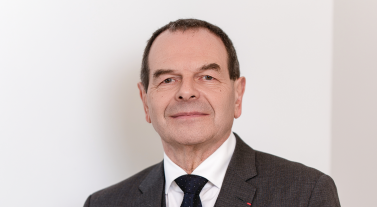
Le Mot du Président - Octobre 2026
En février dernier, Bruitparif sollicitait l’ACNUSA pour conduire une étude commune au sujet de la...
-
Actualités
Publié le 21 octobre 2026
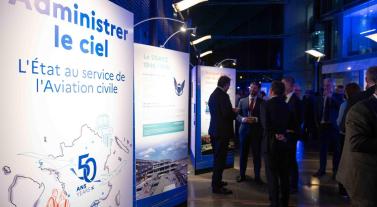
L’ACNUSA présente lors du vernissage des 50 ans de la DGAC
Invité au vernissage de l’exposition célébrant les 50 ans de la Direction générale de l’aviation...
-
Actualités
Publié le 20 octobre 2026
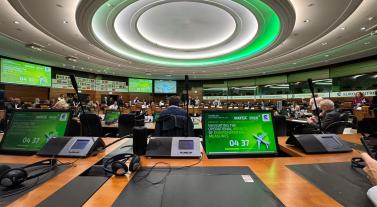
L'ACNUSA a participé à une conférence organisée par Eurocontrol sur les défis environnementaux de l'aérien
Le 1er octobre 2026, EUROCONTROL a accueilli, aux côtés d’IFATCA et de SESAR Joint Undertaking...
Publié le 15 janvier 2026
Presentation of the Authority
The Airport Noise Control Authority is an administrative authority. independent .
It is composed of ten members. These are individuals appointed by the President of the Republic, the Presidents of the Senate and the National Assembly, or nominated by the Council of Ministers for their expertise in the legal, scientific, human health, or air transport fields. It is supported by seven associate members who exercise its disciplinary powers. A permanent team comprised of three departments (administrative, legal, and technical) assists the board in carrying out its various functions.
It carries out all of its missions mainly on and around the main French airports (more than 20,000 aircraft movements of more than 20 tonnes per year) and airfields whose operation is restricted for environmental reasons by ministerial decrees.
It is competent to deal with aircraft noise emitted by all aerodromes throughout the French territory and with helicopter noise in densely populated areas, but only exercises its powers of sanction for aerodromes and heliports where environmental regulations exist.
- The Noise Control Authority is a regulatory body for noise-related matters.
It develops technical specifications for noise measurement indicators and monitoring devices, in accordance with international and EU regulations. It ensures that operators comply with its noise-related regulations and, after issuing a formal notice, may itself carry out the necessary work and improvements to achieve compliance, at the operator's expense and under their responsibility. To this end, it maintains close contact with the National Noise Council, as well as with local observatories and various relevant scientific and technical bodies. - The supervisory authority is an advisory body.
It is consulted for its opinion on:- plans and action programs dealing with airport nuisances on and around the main French airports;
- air traffic modification projects ;
- draft regulatory texts aimed at ensuring the protection of the environment of aerodromes.
Finally, it can issue, on its own initiative or at the request of the parties concerned, opinions or recommendations on all matters relating to environmental nuisances on and around airports.
- The Authority exercises its powers to impose sanctions for all violations of environmental regulations established by ministerial decrees.
Reports of suspected violations are drawn up and prosecutions are initiated by sworn and commissioned state agents (civil aviation personnel or air transport police). The rapporteur assigned to the regulatory authority examines the case file, which is investigated impartially by sworn and commissioned state agents, considering both incriminating and exculpatory evidence against the accused. Once the adversarial investigation is complete, the rapporteur presents each report to the Authority's board in the presence of the accused, who is invited to submit any final observations. The board then deliberates in closed session. Its decisions may, of course, be appealed to the administrative courts. These appeals have, over the years, allowed for the development of a robust body of case law. The amount of fines imposed by the board of the Supervisory Authority is collected by the Special Claims Directorate of the Public Treasury (Directorate General of Public Finances). It is allocated to the State's general budget. - The Regulatory Authority is an oversight body.
It monitors, either on its own initiative or at the request of the environmental advisory committees, compliance with the commitments made by the various stakeholders involved in the operation of the aerodrome, with the aim of controlling noise pollution. No one may obstruct its actions for any reason whatsoever. The representatives of the stakeholders take all necessary measures to facilitate its work and are required to provide any information and documents relevant to its activities. In the event of a disagreement regarding the implementation of commitments, the Authority may be asked to mediate between the parties. - The regulatory authority issues public recommendations and reports on its actions.
It can issue recommendations on any matter relating to environmental nuisances at and around airports. The follow-up to its recommendations is also made public. It prepares an annual public report submitted to the highest state authorities.